Is a roadster the same as a convertible?
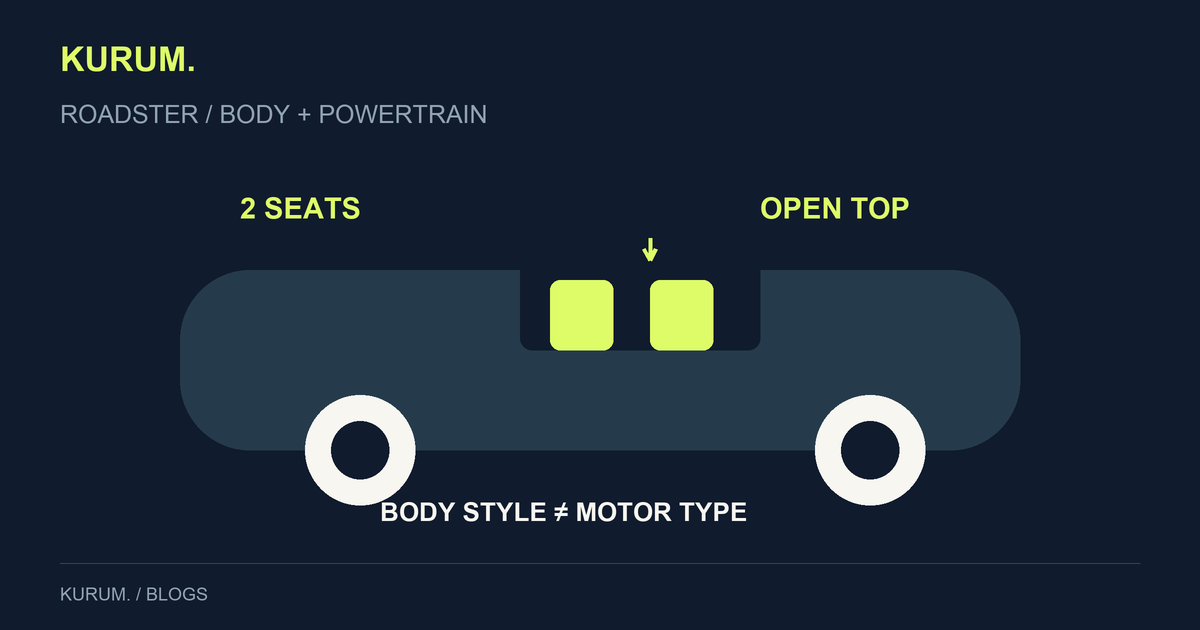
Roadster usually suggests a two-seat sports car built around open-air driving. Convertible is a broader term for cars with an opening roof and can include vehicles with more seats. Usage varies between manufacturers and periods, so the particular model’s specification matters more than the label alone.
Mazda offers a useful example. Its 2015 release describes the Japanese-market Roadster, known elsewhere as the MX-5, as a lightweight, open-top two-seater. The term therefore is not a generic name for Tesla’s electric technology. [1]
How does a roadster work?
Body style and propulsion are separate classifications. A petrol roadster uses combustion to produce mechanical power. An electric roadster supplies stored battery energy to a motor through power electronics. Asking how one works requires identifying the model before choosing an explanation.
Sedan, SUV and roadster describe aspects of vehicle design. Electric, hybrid and petrol describe propulsion. A roof mechanism is another separate system. Keeping those categories apart avoids assuming that an opening roof implies a particular battery or motor arrangement.
How did the original Tesla Roadster transfer power?
Tesla’s service data for the original Roadster identifies an electric motor and a single-speed fixed-gear transmission. Its 2013 company report describes the battery, power electronics, motor, gearbox and control software as an integrated powertrain. These historical sources should not be presented as a complete specification for a later vehicle with the same name. [2][3]
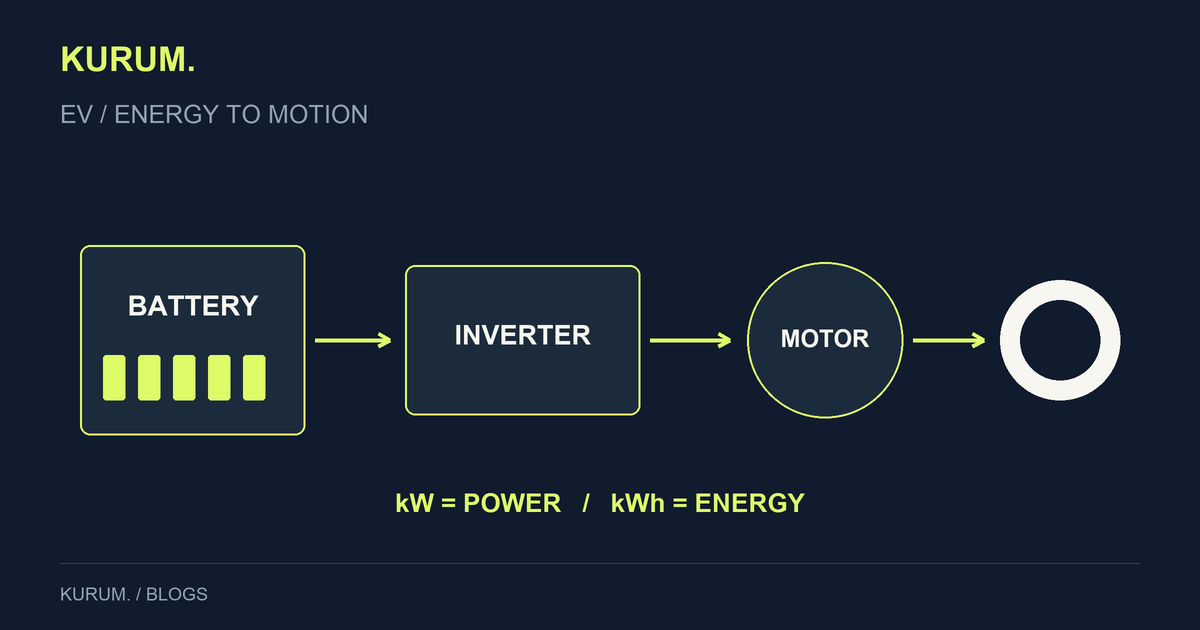
The battery supplies direct current. An inverter controls the electrical supply needed by the motor, which produces rotation. A fixed-ratio transmission transfers that movement to the wheels. Pedal input becomes a request for torque managed by the control system, rather than a demand for combustion through a conventional multi-speed gearbox.
What does regenerative braking do?
During suitable deceleration, the motor can act as a generator and return some movement energy to the battery. This recovers energy that otherwise would be dissipated as heat through braking. It is part of powertrain control, rather than a source of free energy. [3]
The amount recovered is limited by the vehicle and battery’s ability to accept it. Regeneration does not remove energy losses or make friction brakes unnecessary. An electric vehicle still needs energy supplied from outside the car. Its owner’s manual remains the relevant operating reference for a particular model.
How should new Roadster claims be interpreted?
A manufacturer’s target and a measured production result are different claims. Range, acceleration and delivery statements should identify a model generation, test conditions and the date of the announcement. This explainer does not assume an unverified delivery date or performance result for a future vehicle.
A useful reading sequence is to identify whether roadster describes a body style or a model name, then establish the generation and propulsion system. Finally, determine whether the claim is a design target, a test result or a delivered specification. That prevents several different cars from becoming one imaginary vehicle in a headline.
Frequently asked questions
Are all roadsters electric?
No. The term describes a style of car and can apply to different powertrains.
Is Mazda’s Roadster the Tesla Roadster?
No. They are different models from different manufacturers.
Does regeneration eliminate charging?
No. It recovers a portion of energy during deceleration but does not eliminate losses or the need for external charging.
Sources
Sources checked: 29 October 2026