What does generative AI generate?
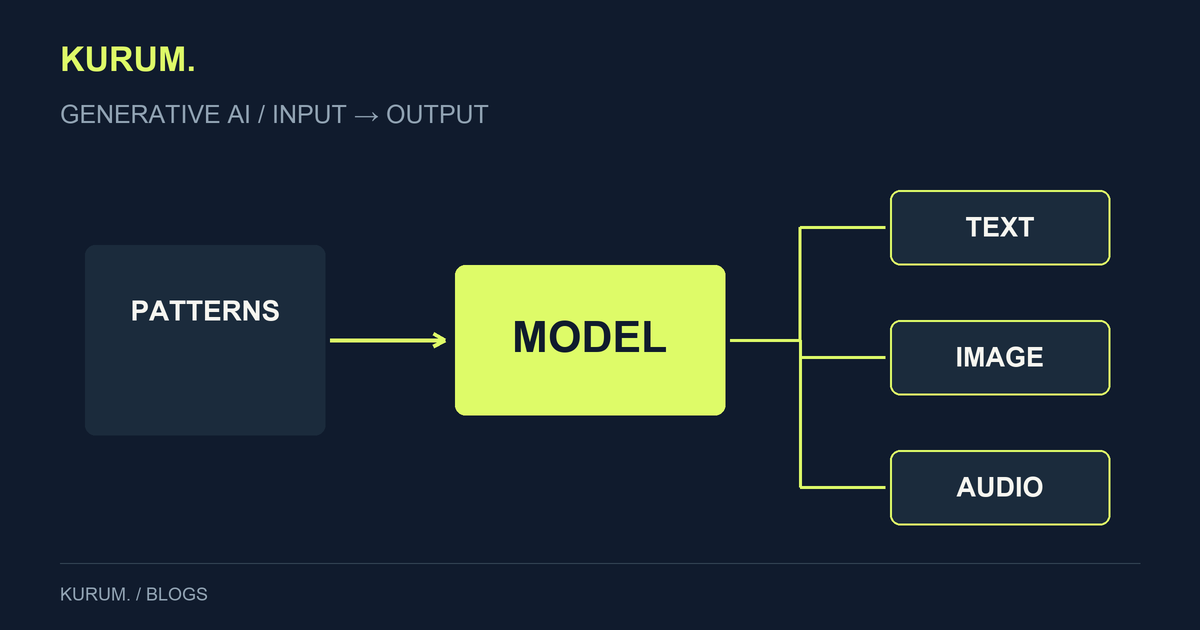
NIST’s definition includes synthetic text, images, video and audio. A classifier might label an email as a support request; a generative tool might draft a response. One assigns a category, while the other creates content. A product can combine both functions. [1][2]
Imagine routing a message to sales or support and then preparing a suitable draft. This hypothetical workflow illustrates two distinct jobs. Understanding whether a system makes a classification or generates new material helps establish what the output should be checked against.
How does it work?
A model learns relationships during training and produces output in response to instructions and context. This is different from retrieving one authoritative sentence from an archive. The prompt, supplied documents and model all affect what is produced. Generative AI describes a content-creation capability rather than every form of AI. [2]
Supplying verified product specifications for a draft is different from asking for an impressive advertisement without supporting details. The former provides a checkable boundary. The latter leaves more gaps for generated wording. Useful deployment therefore involves designing inputs and checks, not simply writing an elaborate instruction.
Where can it help a business?
Possible tasks include first drafts, extracting topics from long documents, exploring alternative wording and assisting software development. These possibilities are not guaranteed productivity percentages. Accuracy requirements, review time and the cost of a mistake change the outcome. A draft that is faster to generate but much slower to correct may save little work.
For a small pilot, select one task. A team could compare its existing responses to ten anonymised support questions with generated drafts. Accuracy, omissions, tone and correction time would be useful headings. Ten examples do not establish statistical performance; they provide an initial way to expose problems before expanding the trial.
What should be checked before use?
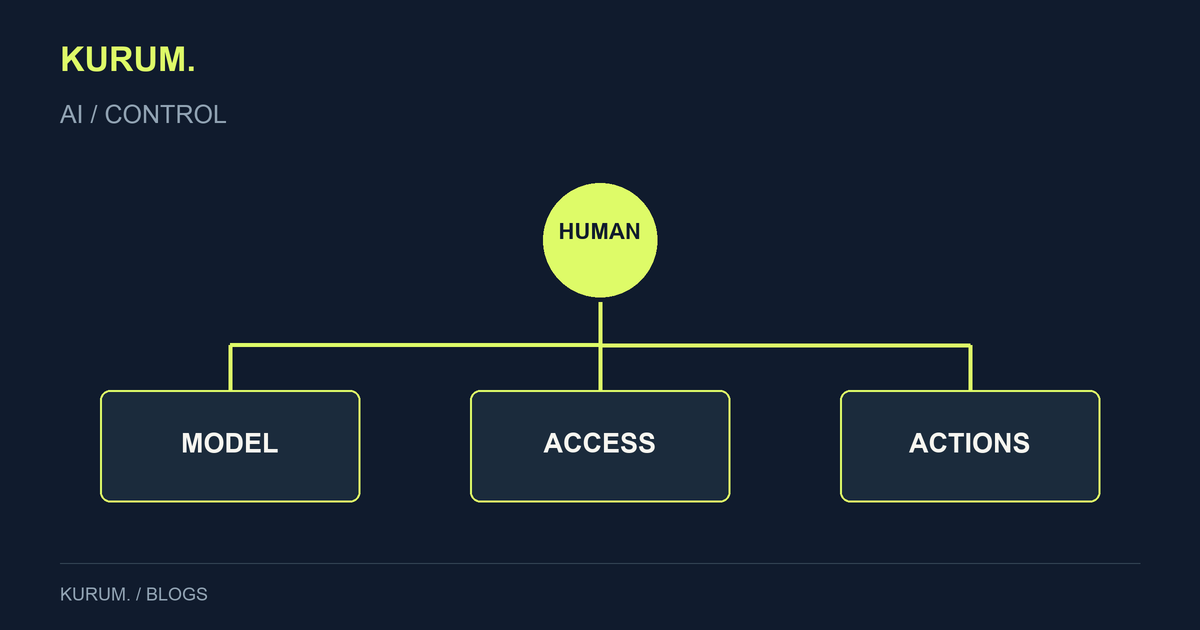
NIST’s framework considers trustworthiness throughout design and use. KURUM.’s practical starting point is to ask what information enters the system, who can access it and where the result will be used. Sensitive customer material and a public product description require different handling. [3]
- Verify unsupported numbers and quotations.
- Use the correct, current version of reference documents.
- Check product claims against approved information.
- Assign responsibility for accepting or publishing the result.
Is generative AI the same as an LLM?
No. Generative AI is the broader content-generation category; a large language model is a family of models working with language. A product may combine chat, retrieval and image generation without making those functions identical. Distinguishing the components clarifies what a tool can be expected to do.
A whole-company rollout is not necessary to learn something useful. One task, a safe dataset and an explicit success measure provide a more manageable start. Assess the total effort required to obtain a usable output, rather than counting only how quickly text appears.
Frequently asked questions
Is all AI generative?
No. Some systems classify or predict; generative systems create content.
Can generated content be published immediately?
It may require checks of facts, rights, data handling and tone. Fluency alone is insufficient.
How should a business measure results?
Compare accuracy, correction time and usable outputs with the existing process for a defined task.
Sources
Sources checked: 29 October 2026