What does “taking over” mean?
The phrase bundles together job displacement, misinformation, interference with critical systems and systems acting against human oversight. These concerns have different mechanisms and evidence. A chatbot producing a false answer does not establish that it can independently exercise power on a global scale.
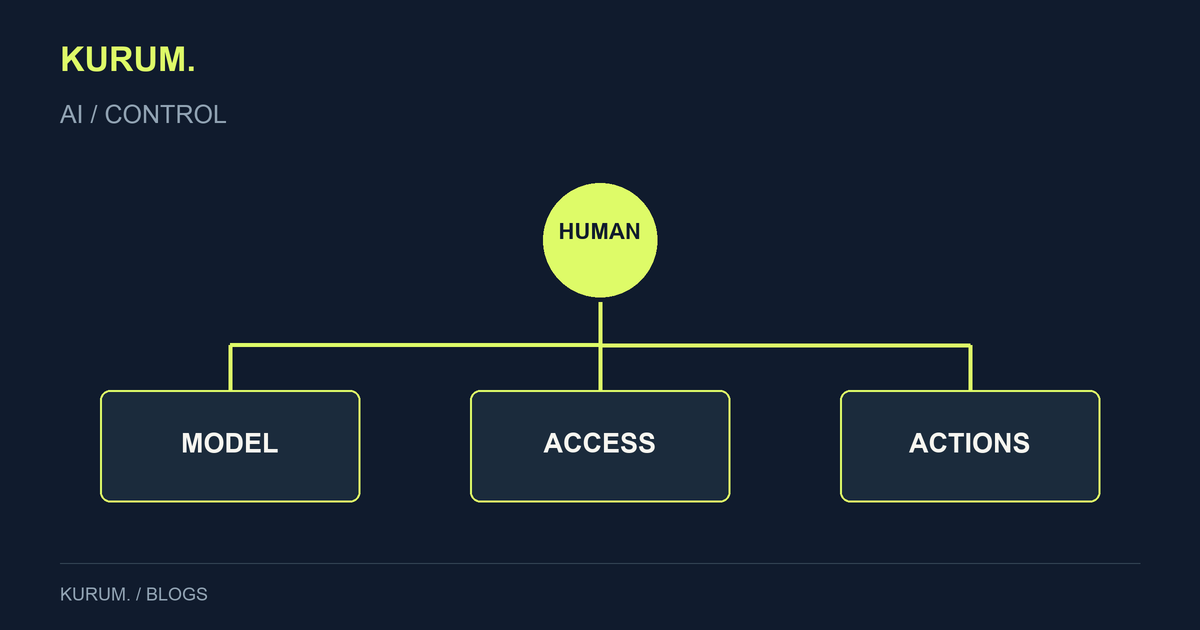
Translate the fear into concrete questions. What system is involved? Which tools can it access? What can it change, and who can stop it? An application that suggests wording has a different risk profile from one able to send payments or alter production software. The surrounding permissions are part of the system, not an afterthought.
What does the scientific evidence establish?
The International AI Safety Report 2026 explains that loss-of-control risk depends on deployment conditions, access and permissions as well as capabilities. It also identifies insufficient evidence to reliably determine how present capabilities would generalise into future loss of control. Neither a certain catastrophe timetable nor a guarantee of safety follows from that assessment. [1]
Two absolute claims therefore go beyond the evidence: that such outcomes can never occur, and that they must happen in a specified year. Describing a possible scenario does not establish a measured probability. Behaviour observed in an evaluation also requires investigation before being treated as a general real-world outcome.
Which problems deserve attention now?
Incorrect information, misdirected documents and unchecked automation can matter even at a small scale. Consider a hypothetical customer-support tool inventing a refund policy. Fluent language does not make the answer accurate or authorised. The relevant operating question is how the organisation detects and corrects the mistake.
Employment concerns need their own analysis. Automating one task is not the same as eliminating an entire occupation. Demand, work organisation, deployment choices and the skills people develop all affect outcomes. Reducing every change to “replacing humans” can conceal the actual decisions a business needs to make.
How can organisations preserve control?
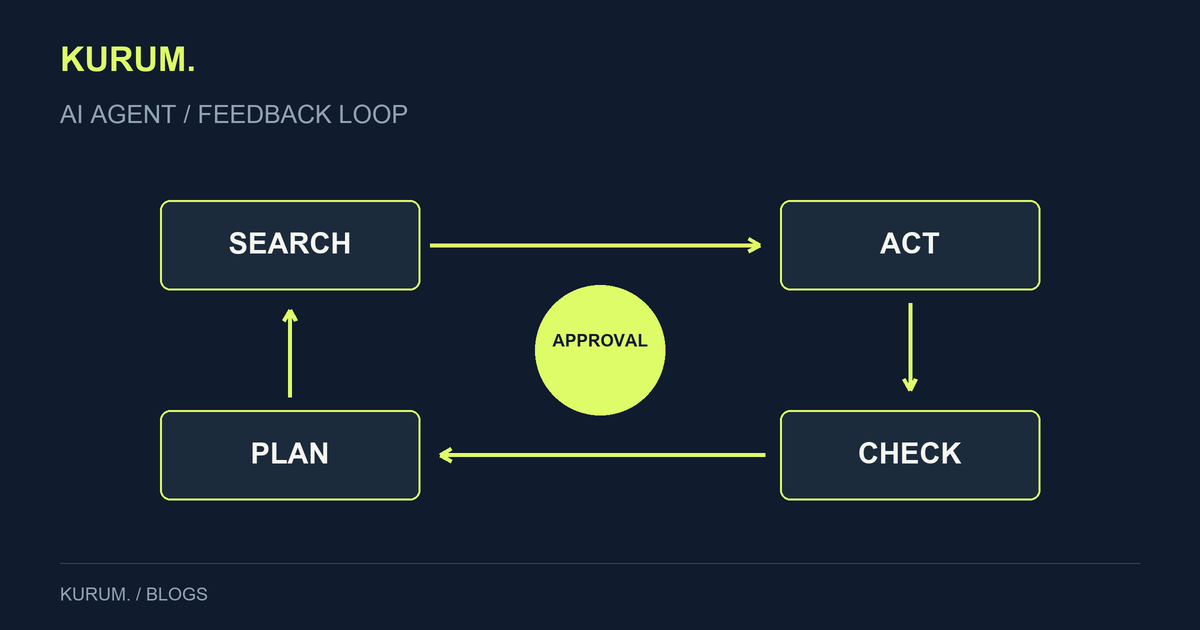
NIST’s framework treats trustworthiness across design, development, use and evaluation. KURUM.’s practical interpretation is to examine what a system can do before focusing on how convincingly it talks. A pilot can begin with read-only access, while consequential actions require human approval. [2]
- Define a bounded task and allowed tools.
- Set stopping limits for errors, spending and duration.
- Keep records and a recovery path for important actions.
- Begin with safe test data rather than live customer consequences.
- Measure errors and correction work alongside speed.
These measures are not a universal guarantee. They establish a testable operating boundary instead of unrestricted authority. Protection should not depend entirely on a model producing a reassuring promise that it will behave safely.
What evidence should readers watch?
Ask whether an evaluation is independent, how long the task runs, what permissions the system has and whether failures are disclosed. An impressive demonstration is not proof of consistent performance. Stronger capabilities require clearer measurement and responsibility.
The honest answer is conditional: the long-term trajectory remains uncertain, while access and oversight decisions are being made now. Understanding those decisions is more useful than treating a science-fiction image as either a forecast or a reason to ignore concrete risks.
Frequently asked questions
Is human extinction from AI certain?
No evidence establishes that certainty or a reliable date. The form and likelihood of severe future risks remain uncertain.
Does harm require consciousness?
No. Incorrect output, misuse and excessive permissions can cause harm without resolving questions about consciousness.
What should a business do first?
Limit access and available actions, then design oversight and approval for consequential operations.
Sources
Sources checked: 29 October 2026